Best Headphones for iPhone in 2026
Headphones for iPhone: USB-C iPhones and wired audio, the AAC codec, which Apple features need which iOS, and three picks from Apple, Beats and Sony.
At a glance
For an iPhone, the Apple AirPods Max 2 offer Adaptive Audio, wired lossless USB-C and iOS 26.4 features, but weigh 13.6 oz. The Beats Studio Pro works with Apple and Android and has a cable and case, and the Sony WH-1000XM6 is a lighter non-Apple option.

Almost any Bluetooth headphone will connect to an iPhone, so the real question is what you give up or gain by picking one brand over another. Apple’s own headphones unlock features that need an Apple device. Beats sits in the middle and works with both Apple and Android. A Sony or Bose pair works with an iPhone like any Bluetooth device but loses the Apple extras. Add the fact that newer iPhones swapped the Lightning port for USB-C, and the wired options have changed too.
This guide explains those differences and picks three pairs from our ranking. We do not test products ourselves. Everything below comes from Apple’s, Beats’ and Sony’s pages and from coverage we opened, and where a page was silent we say so. For the whole lineup, see our best headphones of 2026 comparison.
What Matters on an iPhone
Which iPhone you own. Apple’s support page says iPhone 15 and later models have a USB-C connector. Older iPhones use Lightning. Wired options depend on this, and so do some features that need a recent iOS.
The codec. On Bluetooth, the codec carries the sound from phone to headphones. SoundGuys says iPhones use AAC for Bluetooth headphones, and that Sony’s LDAC only works with Android. So a long codec list on a spec sheet mostly matters to Android owners. AAC is fine for everyday listening.
Apple-only features. Apple’s specs page for the AirPods Max 2 ties several features to recent software: Adaptive Audio, Conversation Awareness and Voice Isolation need the latest firmware and iOS 26.4 or later. Check your iPhone’s iOS version before counting on one.
Wired audio. A cable keeps music going when the battery is flat and, with some models, carries lossless audio.
Weight and battery. Apple’s headphones are heavier, and their battery life is shorter than some rivals’. See the picks below.
Wired Headphones and the USB-C iPhone
Apple’s support page says the USB-C connector on iPhone 15 and later works with wired headphones and other audio accessories, including EarPods (USB-C), sold separately. For headphones that do not use USB-C, Apple lists its USB-C to 3.5 mm headphone jack adapter or its USB-C to Lightning adapter. So if you own a pair with a 3.5 mm cable, expect to buy an adapter for a modern iPhone. An older Lightning iPhone is a different case, and Apple’s page we read covers only the USB-C models.
Three of the headphones we rank have a wired option:
- The AirPods Max 2 deliver 24-bit, 48 kHz lossless audio with the included USB-C cable, according to Apple, with compatible content from supported apps and services.
- The Beats Studio Pro has a 3.5 mm analog input and USB-C for lossless audio and charging, according to Beats, with both cables in the box.
- The Sony WH-1000XM6 has a supplied cable and a 3.5 mm jack, but SoundGuys lists no USB listening, so its USB-C port is for charging only.
Our Picks for iPhone
Apple AirPods Max 2: Most Integrated With iPhone
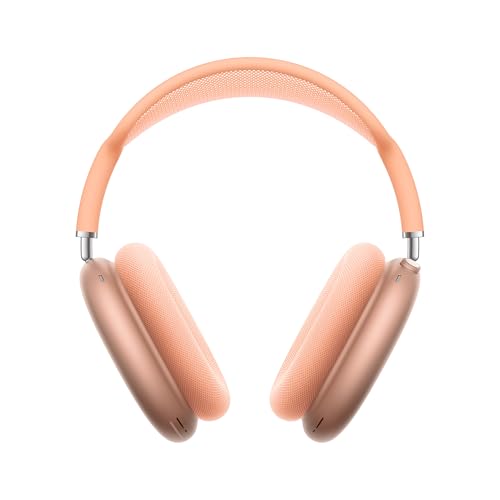
Apple's H2 over-ear headphones, with Adaptive Audio, Conversation Awareness and wired lossless USB-C, aimed at people who live in Apple's ecosystem. Heavier than rivals.
Apple announced these on March 16, 2026. Each earcup has an H2 chip, and Apple says active noise canceling is up to 1.5 times more effective than the previous generation. Apple lists nine microphones, Transparency mode, Adaptive Audio and Conversation Awareness, plus Voice Isolation for calls. Live Translation is powered by Apple Intelligence and marked beta; Apple’s newsroom post says it needs an Apple Intelligence-enabled iPhone on iOS 26 or later. Personalized Spatial Audio needs an iPhone with a TrueDepth camera to create a profile.
The trade-offs are weight and battery. Apple lists 13.6 ounces (386.2 grams) and up to 20 hours with ANC on, with about 1.5 hours from a five-minute charge. By comparison, Sony lists about 9 oz for the WH-1000XM6. The Smart Case weighs 4.74 ounces, and Apple’s pages do not describe a folding design. Wireless uses Bluetooth 5.3, and the pages we read do not name codecs. Our listing is the orange color; Apple lists five. See the AirPods Max 2 profile.
Beats Studio Pro: Apple and Android, With a Cable
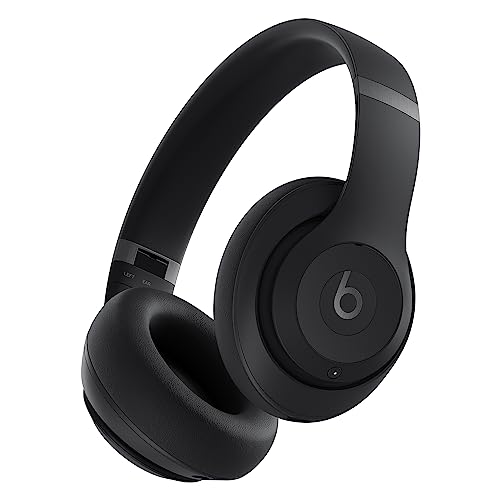
Works with Apple and Android, folds into an included case and keeps both a 3.5 mm input and USB-C lossless audio. An older 2023 design that is still sold.
Beats says the Studio Pro supports Apple and Android, with Apple’s Find My and Google’s Find My Device both showing the last known location on a map. It lists Personalized Spatial Audio with dynamic head tracking and Dolby Atmos. Battery is up to 40 hours with ANC off and up to 24 hours with ANC or Transparency on. It weighs 9.17 oz (260 g), and the design folds to fit the included carrying case.
For wired use, Beats lists a 3.5 mm analog input and USB-C for lossless audio and charging, with a 3.5 mm cable and a USB-C to USB-C cable in the box. A USB-C power adapter is sold separately. The weak points: Beats’ page gives no Bluetooth version or codec list, and it is a 2023 design, so do not expect the newest chip. See our Beats Studio Pro profile.
Sony WH-1000XM6: A Non-Apple Option That Works Well
Sony's flagship noise canceling pair: foldable with a case, multipoint and a supplied cable. On an iPhone it uses AAC, and its USB-C port is for charging only.
If you do not need Apple features, a non-Apple flagship is a reasonable choice. According to MacRumors, the WH-1000XM6 pairs a QN3 processor with 12 microphones and folds into a redesigned case. Sony’s help guide lists a weight of approximately 9 oz (254 g) and Bluetooth 5.3, with SBC, AAC, LDAC and LC3 as supported audio formats. SoundGuys says LDAC only works with Android, so an iPhone will use AAC. MacRumors reports 30 hours of battery.
You give up Apple’s software features and a USB audio input. Sony’s help guide includes a topic on connecting two devices at once (multipoint), which helps if you also use a laptop. See the Sony WH-1000XM6 profile, and compare the Bose QuietComfort Ultra (2nd Gen) profile for wired USB-C audio from a non-Apple maker.
Which One for Which iPhone Owner
- You use an iPhone, a Mac and an iPad: the AirPods Max 2, if you can live with 13.6 oz.
- You switch between iPhone and Android, or want a case and cable: the Beats Studio Pro.
- You want lighter and do not need Apple features: the Sony WH-1000XM6.
- You want wired lossless over USB-C: check that the headphones have USB-C audio, which the AirPods Max 2, Beats and Bose list, and the Sony does not.
Before You Order
- Check your iPhone’s iOS version against the feature you want. Apple lists iOS 26.4 for several AirPods Max 2 features.
- Confirm the model name and color on the listing.
- Check what is in the box: cables and any case.
- Plan for an adapter if your cable has a 3.5 mm plug, since a USB-C iPhone has no jack.
- Look at the seller and warranty, and check the return window, since fit and weight are personal.
Sources
- Charge and connect with the USB-C connector on your iPhone, Apple Support
- AirPods Max tech specs, Apple
- Apple introduces AirPods Max 2, powered by H2, Apple Newsroom
- Beats Studio Pro official product page
- Sony WH-1000XM6 specifications, Sony Help Guide
- Sony Announces WH-1000XM6 Noise-Canceling Headphones With Foldable Design, MacRumors
- Sony WH-1000XM6, SoundGuys
- Bose QuietComfort Ultra Headphones (2nd Gen), Bose official product page
Frequently asked questions
Can I plug wired headphones into a USB-C iPhone?
Yes. Apple's support page says iPhone 15 and later models have a USB-C connector and that it works with wired headphones and other audio accessories, including EarPods (USB-C), sold separately. For headphones that do not use USB-C, Apple lists its USB-C to 3.5 mm headphone jack adapter or its USB-C to Lightning adapter.
Which codec do headphones use with an iPhone?
SoundGuys says iPhones use AAC for Bluetooth headphones, and that the Sony WH-1000XM6's LDAC codec only works with Android devices. So on an iPhone the Sony uses AAC. Apple's pages we read do not list codecs for the AirPods Max 2, and Beats' page gives no codec list for the Studio Pro.
Do the AirPods Max 2 support lossless audio on iPhone?
Apple says lossless and ultra-low-latency audio require a wired USB-C connection plus compatible content from supported apps and services. Apple lists 24-bit, 48 kHz lossless over the included USB-C cable. Wirelessly, the headphones use Bluetooth 5.3, according to Apple.
Which iOS version do AirPods Max 2 features need?
Apple's specs page says Adaptive Audio, Conversation Awareness and Voice Isolation need the latest firmware and iOS 26.4 or later, and Live Translation needs the latest operating system with Apple Intelligence turned on, in beta. Personalized Spatial Audio needs an iPhone with a TrueDepth camera to create a profile.
Does the Beats Studio Pro work with iPhone?
Yes. Beats says it supports Apple and Android, and lists Apple Find My, which shows the last known location on a map. It also lists a 3.5 mm analog input and USB-C for lossless audio and charging, with both cables in the box.
Do non-Apple headphones work well with an iPhone?
They connect over Bluetooth like any pair. The trade-off is Apple-only features and codecs. The Sony WH-1000XM6 offers multipoint and a supplied cable, but its USB-C port is for charging only, according to SoundGuys, and it uses AAC on an iPhone.