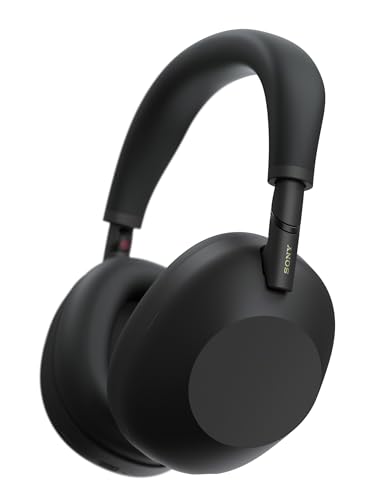
If you want one pair of noise canceling headphones for flights, offices and commutes, the Sony WH-1000XM6 is the model we rank first on this site. This profile covers what Sony and the launch coverage say about it: the processor, the microphones, the codecs, the battery life, the folding design and the trade-offs. We do not test products or take our own measurements. Every figure below comes from a page we opened, and we name the source so you can check it yourself. When a page did not state something, we say so instead of guessing.
What Is the WH-1000XM6?
The WH-1000XM6 is Sony’s flagship over-ear wireless headphone with active noise canceling, announced in May 2025. MacRumors reported the news on May 16, 2025, framing it as the successor to the WH-1000XM5. The headline changes it listed were a returning folding design, a new noise canceling processor, more microphones and improved Ambient Sound handling. In the lineup on this site it sits at the premium end, aimed at people who want the strongest noise reduction on paper and are happy to pay for it. Use the button at the bottom to see the current price on Amazon, since we do not list prices.
Noise Canceling: Processor and Microphones
Noise canceling is the reason to look at this model. According to MacRumors, Sony’s HD Noise Canceling Processor QN3 is paired with 12 microphones, which the article describes as 1.5 times as many as the previous model. It also reports Sony’s claim that the new processor is seven times faster than its predecessor’s. Sony claims significantly improved noise canceling and a better Ambient Sound mode. MacRumors also describes a Scene-based Listening feature that adjusts settings automatically based on your activity and surroundings.
Those are manufacturer claims, so treat them as a description of the design rather than proof of how it sounds on your commute. For an outside data point, SoundGuys, a site that publishes lab measurements, says its data places the XM6’s ANC above 84% of the over-ear headphones in its database, and calls them a worthy successor to Sony’s other ANC headphones.
Connectivity and Codecs
Sony’s help guide lists Bluetooth specification version 5.3 with a line-of-sight range of about 32.8 feet (10 m). The listed profiles are A2DP, AVRCP, HFP, HSP, TMAP, GMAP and PBP. For audio formats, the same page lists SBC, AAC, LDAC and LC3. MacRumors adds that the headphones support LE Audio with Auracast, the broadcast feature that lets compatible devices listen to a shared audio stream.
LDAC is Sony’s higher-bitrate codec, but it is not available on every phone. SoundGuys points out that LDAC only works with Android devices. If you use an iPhone, expect AAC, which is the codec iPhones use for Bluetooth headphones. That is perfectly fine for everyday listening, but it means the LDAC bullet point is mostly relevant to Android owners.
On multipoint, Sony’s help guide includes a topic titled Connecting the headset to 2 devices simultaneously (multipoint connection), and SoundGuys lists multipoint as supported for two devices. The page we read from Sony did not spell out microphone counts for calls, and SoundGuys describes a different microphone count from Sony’s announcement figure, so we are only citing the 12 microphones that MacRumors attributes to Sony’s announcement.
Wired Listening and Charging
If you fly or work in places where Bluetooth is awkward, a cable matters. Sony’s help guide has a topic called Using the supplied headphone cable, so a cable is part of the package. SoundGuys lists a 3.5 mm headphone jack, which lets you plug into airplane seatback entertainment or older gear. SoundGuys also lists “No USB listening” as a drawback, which means the USB-C port is for charging and you cannot use it as a digital audio input. If you want USB-C digital audio, look at the Bose QuietComfort Ultra Headphones (2nd Gen), where Bose describes lossless wired audio over USB-C.
MacRumors says you can charge and listen at the same time. Sony’s help guide gives a charging time of about 3.5 hours for a full charge, though it notes that this can vary with use.
Battery Life
MacRumors reports 30 hours, unchanged from the XM5, and says a three-minute quick charge provides up to three hours of playback. SoundGuys lists 30 hours with noise canceling on and about 37 hours as its wireless figure, and it labels the battery life below average for over-ear headphones. Sony’s help guide page we opened does not list playback hours, so we do not quote a Sony-published figure here beyond what the announcement coverage reports. In plain terms: expect a long-haul flight to be manageable, but if you want multi-day endurance without a charger, there are headphones with longer battery life elsewhere on this site.
Design, Comfort and Weight
Sony’s help guide lists a weight of approximately 254 g, or about 9 oz. The big design news is the return of the folding hinge. MacRumors says the XM6 folds into a redesigned case with a magnetic closure that it calls more compact and travel-friendly than the XM5’s case. For anyone who packs headphones in a backpack or carry-on, that is a practical improvement. Sony’s help guide also lists a topic on setting the headset in the carrying case, which matches the case described in the announcement coverage.
On comfort, SoundGuys notes pleather ear pads. It also says owner opinions are split: one owner regrets buying them because the earcups felt very shallow, while another found them light and a good fit. That is useful to know. Comfort is the most personal part of buying headphones, and a headband that suits one head will not suit another. Check the return window when you buy.
Who Should Buy the WH-1000XM6
- Frequent travelers and commuters who want the most aggressive noise canceling in our lineup and a case that folds small.
- Android owners who want LDAC, and anyone who values a wide codec list that includes LC3 for newer Bluetooth devices.
- People who switch between a phone and a laptop and want multipoint support for two devices.
- Shoppers who want a physical cable option. The supplied headphone cable and 3.5 mm jack cover in-flight entertainment and older audio gear.
Who Should Look Elsewhere
- iPhone owners who want the tightest Apple integration. The Apple AirPods Max 2 are built around H2 features like Adaptive Audio and Conversation Awareness.
- People who want USB-C digital audio. SoundGuys lists no USB listening.
- Anyone who prioritizes the longest battery life. The 30-hour figure is the same as the previous generation, and SoundGuys calls it below average.
- Shoppers on a tighter budget. This is the premium tier. The Bose QuietComfort Headphones (2nd Gen) sit lower in our lineup.
What to Check on the Amazon Listing
- Model name. The listing title should read WH-1000XM6. Older WH-1000XM5 and XM4 listings look similar but are different headphones.
- Color. Colors can vary by listing. Pick the one shown in the photo you want and check that the title matches.
- Seller and warranty. Confirm who sells and ships it and whether Sony’s warranty applies. Third-party sellers sometimes list unopened stock without manufacturer coverage.
- Return window. Because fit and comfort are so personal, make sure you know how long you have to return them.
- Customer reviews. Read the recent customer reviews on Amazon for notes about comfort, call quality and multipoint behavior on your type of phone.
Bottom Line
The Sony WH-1000XM6 is the model we would hand to someone who says, simply, that they want the best noise canceling headphones for everyday life. On paper it combines a new QN3 processor, 12 microphones, a broad codec list, multipoint, a folding design and a supplied cable. The trade-offs are the lack of USB listening, the LDAC-versus-iPhone limitation, battery life that did not improve on the previous generation, and shallow earcups that some owners dislike. If those do not worry you, it is a very strong first choice.
See price on Amazon
To see where the WH-1000XM6 lands among all ten models we cover, read our best headphones of 2026 comparison. If you want a mid-range alternative from a rival, the Bose QuietComfort Headphones (2nd Gen) are the next stop.
Sources