Best Headphones for Airplane Travel in 2026
Noise canceling headphones for flying: battery for long-haul, folding and cases, 3.5 mm cables for seatback screens, and three picks from budget to premium.
At a glance
For flying, the Sony WH-1000XM6 is our first pick: foldable with a case, a supplied cable and a 30-hour battery life, according to MacRumors. The Bose QuietComfort Ultra Headphones (2nd Gen) come with a case and two cables, and the Soundcore Space 2 lists the longest battery life.

A long flight is the setting where noise canceling headphones earn their keep. The engine drone is constant, the cabin is crowded, and you may spend six or ten hours with the same pair on your head. That raises practical questions a shopping list rarely covers. Will the battery last the whole trip? Does the pair fold into a bag that already holds a laptop and a jacket? Can it plug into the seatback screen? And what happens when the battery dies somewhere over the ocean?
This guide works through those questions and picks three pairs from our ranking to match. We do not test products ourselves. Everything below comes from the makers’ pages and from coverage we opened, and we name the source for each figure so you can check it. Where a page was silent, such as whether a pair folds, we say so. For the whole lineup, see our best headphones of 2026 comparison.
What to Look for in Headphones for Flying
Noise canceling. Active noise canceling (ANC) uses microphones and electronics to reduce steady low-frequency sound, which is why it suits engine noise better than a talkative neighbor. Makers describe the technology differently and few publish decibel figures. We found no independent measurements in the pages we opened for two of the three picks, so we compare features, not noise reduction.
Battery. For a long-haul flight, look at the battery life listed with ANC on, since that is how you will use them. Remember that makers measure under their own conditions, and volume, codecs and spatial audio features shorten it.
Foldability and a case. A pair that folds flat and rides in a hard case survives a carry-on better. Not every maker says whether its headphones fold.
A cable. Many seatback screens use a 3.5 mm jack, though not every plane has one, and some use a two-prong plug. A cable also keeps you listening if the battery empties. Check what is in the box for each model.
Weight and comfort. You wear them for hours. Weight is published, but clamping force and cushion shape are not, so check the return window.
Our Picks for Airplane Travel
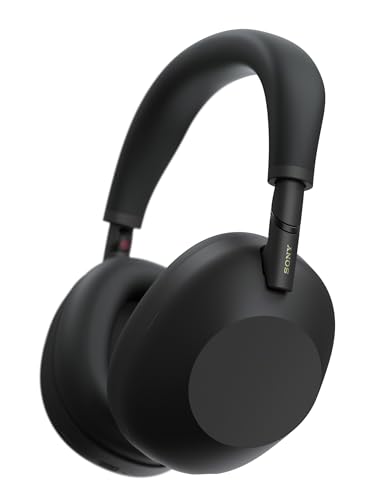
Sony WH-1000XM6: Our First Pick for Flying
Foldable again, with a case, a supplied cable for seatback screens and a 30-hour battery life, per MacRumors. Our first pick for long-haul comfort and noise canceling on paper.
The WH-1000XM6 checks most travel boxes on paper. According to MacRumors, which reported Sony’s May 2025 announcement, the headphones pair a QN3 noise canceling processor with 12 microphones and fold into a redesigned case with a magnetic closure. Sony’s help guide lists a weight of approximately 9 oz (254 g), and a topic on using the supplied headphone cable. SoundGuys lists a 3.5 mm headphone jack, which fits airplane seatback screens, and notes there is no USB listening, so the USB-C port is for charging only.
MacRumors reports 30 hours of battery, with a three-minute quick charge providing up to three hours of playback. That covers most flights, but SoundGuys labels the figure below average for over-ear headphones, and other models on this page publish more. SoundGuys says its noise-canceling data places it above 84% of the over-ear headphones in its database. For the full spec list, read our Sony WH-1000XM6 profile.
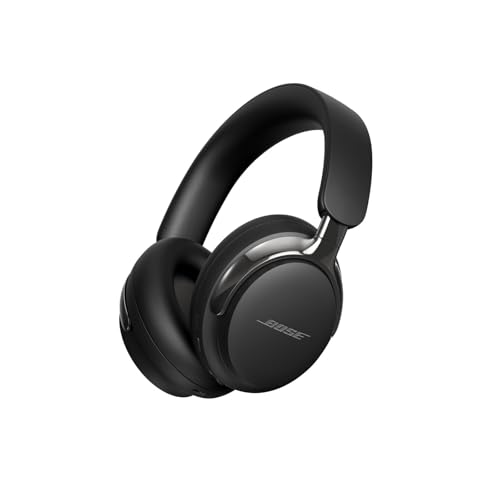
Bose QuietComfort Ultra Headphones (2nd Gen): Best for Comfort and Cables
Bose lists a carry case, a 3.5 mm to 2.5 mm audio cable and a USB-C cable in the box, with up to 30 hours of battery. A strong rival for travelers who like to tune the sound.
According to Bose, the box includes a carry case, a 3.5 mm to 2.5 mm audio cable and a 39-inch USB-C to USB-C cable. Bose describes wired USB-C audio as lossless. The analog cable covers seatback screens, provided the plug type fits, so check the jack on your airline. Bose lists up to 30 hours of battery, or 23 hours with Immersive Audio on, and a quick charge of 15 minutes for 3 hours of playback. A footnote gives lower figures under Bose’s own test conditions, so treat 30 hours as a best case.
Bose lists four listening modes, Quiet, Aware, Immersion and Cinema, and you can save up to 10 favorites, which helps when you move from a loud cabin to a quiet hotel. The headphones weigh 0.583 lb, about 9.3 oz, according to Bose. The page does not say whether the earcups fold, and it does not mention multipoint, so confirm both if they matter. See the Bose QuietComfort Ultra (2nd Gen) profile for details.
Soundcore Space 2: Best Budget Pick for Battery
Soundcore publishes up to 50 hours with ANC on and an Aux input with wired Hi-Res Audio. The budget pick for long trips, with a few details to confirm.
The Space 2 is the long-haul battery leader on paper. Soundcore’s product page says up to 50 hours with ANC on or 70 with it off, and its spec page, measured on an iPhone at 50% volume, lists ANC at 50 hours with wearing detection off and 45 with it on. ANC with LDAC drops to 40 and 35 hours. Soundcore says a 5-minute charge provides 4 hours of listening, which is useful before a boarding call.
Soundcore lists Aux in as yes and Hi-Res Audio in wired mode, but its pages do not name the cable in the box, so check the listing. They also do not say whether the headphones fold or come with a case, which matters for a carry-on. It weighs 9.31 oz (264 g), according to Soundcore, and adds Bluetooth 6.1, LDAC, multipoint and a noise cancellation depth of -37 dB, a figure from Anker’s own laboratory. Our Soundcore Space 2 profile covers the fine print.
Another Option With a Case and Cable
The Beats Studio Pro is worth a look if you want both in the box. Beats says it includes a carrying case and a 3.5 mm cable, that the design folds to fit the case, and that the 3.5 mm input suits in-flight entertainment. Its battery life is up to 40 hours with ANC off and up to 24 hours with ANC or Transparency on, according to Beats. It is a 2023 design that is still sold.
Battery for Long-Haul Flights
Add up the hours on your itinerary, including layovers, then compare that total with the battery figure for ANC on.
- A flight of 6 to 8 hours sits well inside every battery figure on this page.
- A trip with connections and a long layover is where a charger or a quick charge pays off. Bose lists 15 minutes for 3 hours, MacRumors reports three minutes for up to three hours on the Sony, and Soundcore says 5 minutes for 4 hours.
- A very long journey favors the Space 2’s published figures, and a wired connection extends any pair if the battery is empty.
Battery figures change in use. Higher volume, LDAC, spatial audio, and features such as wearing detection can shorten them, and Soundcore’s own spec page shows the spread. Charge the headphones before you leave, and bring the cable.
Seatback Screens and Cables
Plane audio varies. Many seatback screens use a 3.5 mm jack, some use a two-prong plug and some planes have no wired audio. Airline Bluetooth adapters, sold separately, can also help, but we did not open a page on them and make no claim about how they work with these models. A few practical steps:
- Check your airline’s page for the audio setup on your aircraft type.
- Look in the box contents: the Sony lists a supplied cable, Bose lists a 3.5 mm to 2.5 mm cable, and Beats lists a 3.5 mm cable.
- Remember a cable keeps the music going after the battery empties.
- Do not expect USB-C audio from a seatback screen. USB audio needs a device that supports it.
Airline Rules and Security
The FAA and TSA pages on portable electronics and headphones refused automated access when we went to read them, so we do not state a rule. Airlines set their own policies, and crews can ask passengers to switch devices off at different points in a flight. Check your airline’s page, follow the crew’s instructions, and keep the headphones with you in the cabin so the case is not crushed in a bag you cannot watch.
Packing Tips
- Store the headphones in the case, and keep the cable and charging cable together in a pocket.
- Charge before the airport, and top up during a layover.
- If the pair does not fold, treat the case as a requirement, not an accessory.
- Take the headphones off before landing if you want to hear announcements, or use a transparency or aware mode, where the model has one.
Which One Should You Buy?
- You want the best all-round pair for flights: the Sony WH-1000XM6.
- You want a case and two cables in the box: the Bose QuietComfort Ultra (2nd Gen).
- You want the longest published battery on a budget: the Soundcore Space 2, after confirming the case and fold.
- You want a pair that folds, with a case and a cable: also consider the Beats Studio Pro.
Sources
- Sony WH-1000XM6 specifications, Sony Help Guide
- Sony Announces WH-1000XM6 Noise-Canceling Headphones With Foldable Design, MacRumors
- Sony WH-1000XM6, SoundGuys
- Bose QuietComfort Ultra Headphones (2nd Gen), Bose official product page
- Soundcore Space 2 official product page
- Soundcore Space 2 specs, features and compatibility (Soundcore support)
- Beats Studio Pro official product page
Frequently asked questions
Do I need a cable to use headphones on a plane?
Not always, but it helps. Many seatback screens use a 3.5 mm jack, though not every plane has one. Beats says the Studio Pro's 3.5 mm input works with the cable in the box and names in-flight entertainment as a use. Sony's help guide lists a supplied headphone cable for the WH-1000XM6, and Bose lists a 3.5 mm to 2.5 mm cable in the box for the QuietComfort Ultra (2nd Gen).
Which of these headphones has the longest battery life?
The Soundcore Space 2, at up to 50 hours with ANC on or 70 with it off, according to Soundcore's product page. Its spec page lists lower figures in some modes, down to 35 hours with ANC, LDAC and wearing detection all on. Bose lists up to 30 hours for the QuietComfort Ultra (2nd Gen), or 23 with Immersive Audio on. MacRumors reports 30 hours for the Sony WH-1000XM6.
Do noise canceling headphones fold for a carry-on?
The Sony WH-1000XM6 does, according to MacRumors, which says it folds into a redesigned case with a magnetic closure. The Beats Studio Pro folds and includes a case, per Beats. Bose and Soundcore do not say on the pages we read whether their models fold, so check the listing photos.
Can I use USB-C audio on a plane?
Only on devices that accept it. Bose describes wired USB-C audio on the QuietComfort Ultra (2nd Gen) as lossless. SoundGuys lists no USB listening for the Sony WH-1000XM6, so its USB-C port is for charging. An airline seatback screen normally takes a 3.5 mm analog plug, not USB-C audio.
Are Bluetooth headphones allowed on flights?
Rules vary by airline and by crew instruction, and we could not open an FAA page on the subject, so we do not state a rule. Check your airline's policy before the flight, and follow any instruction from the crew, especially during takeoff and landing.
Should I choose a premium pair or the budget pair for flying?
Premium pairs publish more detail on folding, cases and cables. The Soundcore Space 2 wins on published battery life figures and offers an Aux input, but Soundcore's pages do not say whether it folds or includes a case. Decide which of those points matters most on your flights.